What to Look For in Cattle Panels Before You Buy
Height, pipe size, rod fill, welds and gate openings decide whether a panel lasts ten years or three. Here is what to check on the lot.
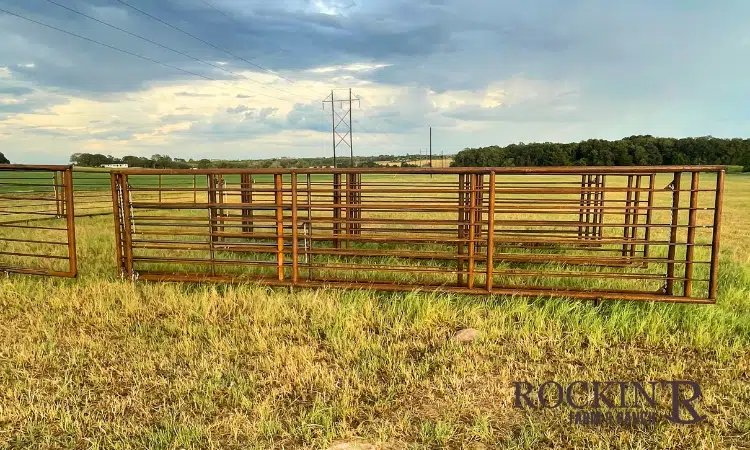
Panels are the cheapest part of a working pen and the most expensive thing to get wrong. Buy light and you will rebuild in three years, usually in the rain, usually with cattle already in the lot. Buy right and the same set will follow you through two or three leases.
What separates a good cattle panel from a bad one is not the paint. It is height, steel, welds and the small hardware you touch every day. Here is what to check before you hand over cash.
Height comes first
Most cattle panels sold today are five feet tall. That is enough for mature cows in a settled pen, and it is what a lot of Texas cow-calf operations run.
Step up to six feet when the cattle are not settled: bulls, fresh-off-the-truck cattle, heifers that have never been through a chute, or anything you plan to crowd hard. A five-foot panel does not stop a determined bull. Six feet will not either, but it gives you a lot more margin before you find out.
Do not go taller than you need. Every extra inch adds weight, and weight is what makes a panel miserable to drag, set and reset by yourself.
Sheep and goat panels are a different conversation. Height matters less than bar spacing, because the job is keeping a small, flexible animal from walking through the panel or hanging a head. Wide-spaced cattle panels in a goat pen are an injury waiting to happen.
Pipe frame and rod fill
Almost every panel on the market is a pipe frame with sucker rod or smaller pipe filling the middle. The frame carries the load. The fill keeps the animal in.
Frame pipe is usually described by outside diameter. One and five-eighths, two and three-eighths, and two and five-eighths inch are the common sizes. Bigger is heavier and stronger, but diameter alone tells you very little, because wall thickness is what actually resists bending. Two panels can both advertise two and three-eighths pipe and one will fold where the other holds.
Sucker rod is the solid steel rod pulled out of oil wells, and it makes a good panel fill. Three-quarter inch rod is common on heavy panels, with lighter rod on economy models. Rod has spring to it. Hit it and it flexes and comes back instead of taking a permanent bend, which is why so many Texas-built panels use it.
The catch is the weld. Solid rod is stiff, so every joint is a stress point. A cold weld, or one that burned too hot and undercut the rod, will crack right beside the joint after a few seasons of cattle hitting it. You cannot fix that later with paint.
Smaller pipe fill is lighter and cheaper. It is fine for calves, sheep, goats and quiet cattle. It dents, though, and a dented panel stays dented and eventually tears at the dent.
Freestanding versus galvanized
These two get compared constantly and they are not really competitors. They solve different problems.
Freestanding panels stand on their own legs. No posts, no driver, no staples. You can build a pen in an afternoon, pull it apart before hay season and move it when you move cattle. On leased ground that is not a luxury, it is the only sane option.
The tradeoff is that freestanding panels rely on weight and geometry rather than on the ground. Set one on soft ground after a rain and a pushing animal can walk a leg in and tip it. Set them level, pin the joints and close the corners.
Galvanized panels are coated to resist rust, and they make sense where a pen will sit for years, especially in wet country or near the coast. They are heavier and they cost more. The coating protects the steel, not the weld, so a galvanized panel with poor welds still fails at the weld. It just fails later.
Powder coat looks better and holds up well, but it is a finish, not a structural feature. A scratch in powder coat rusts at the scratch. Galvanized coating scratched by gravel does the same.
What to check with your hands
Stand the panel up on hard ground and shake it. A good panel moves as one piece. A bad one rattles at the joints.
- Welds. Look at every joint on the frame. You want a full, even bead with no undercut and no pinholes. Run a thumb along each weld; sharp edges and thin spots are a bad sign.
- Capped ends. Open pipe ends take on water and rust from the inside out. Caps are a small detail that tells you the builder was paying attention.
- Straightness. Sight down the top rail. A twist you can see with the panel lying flat will get worse under load.
- Legs and feet. The feet should be welded square and the panel should sit flat. A rocking panel will not stay where you put it.
- Pins and hinges. Connectors are where panels come apart under pressure. Look for a real pin with a keeper, not a bent rod or a loop of wire.
- Weight. Heavy is not automatically better, but a panel that feels light for its size is thin somewhere.
Count panels before you buy
Panels usually come in 24-foot lengths, with shorter utility panels for tight spots. A square pen is just perimeter divided by panel length.
A 60-foot by 60-foot pen is 240 feet around. At 24 feet per panel that is ten panels, and then you still need an opening for a gate. Most people forget the gate and go back for an eleventh panel.
Plan the opening before you buy. Ten feet handles cattle and a pickup. Twelve or sixteen feet handles a trailer. A bow gate set into a run of panels saves you a post and gives you a natural place to load.
The gate is the part you touch every day
Most ranch work is not moving the herd. It is opening and closing a gate fifty times while you sort. Buy a gate with a latch you can work one-handed in gloves and a hinge that does not sag after a season.
Bow gates run from about four feet to twelve feet wide. A ten-foot gate welded into a panel is a common and useful setup because it turns one panel into a gate without a separate post.
Ask before you pay
Five questions worth asking on any lot:
- Is this panel freestanding, or does it need posts?
- What is the frame pipe size, and what is the wall thickness?
- Is the fill welded on both sides?
- What happens if a weld fails in the first season?
- Can it be delivered, and what does delivery cost to my place?
We sell on cash or check and all sales are final, so look the panels over before they leave the lot. Delivery is available, and both stores can tell you what it takes to get a set to you.
A panel is a tool, not a decoration. The right one looks a little boring after ten years because nothing has happened to it.
The short version
Match height to the wildest animal you own, match the fill to the animal you are keeping in, and match the frame to the job. Then check the welds, the caps and the pins. If all of that holds up, the price gap between a good panel and a cheap one disappears the first time you do not have to rebuild a pen.
Common questions
What height cattle panel do I need?
Five feet works for mature cows in a settled pen. Six feet is the safer choice for bulls, freshly shipped cattle, and anything you plan to crowd hard.
Is sucker rod better than pipe fill?
Sucker rod flexes and springs back, which suits heavy cattle. Round pipe fill is lighter and cheaper and fine for calves, sheep and goats. The weld matters more than which one you pick.
How many panels does it take to build a pen?
Figure perimeter divided by panel length. A 60 by 60 foot pen is 240 feet around, so ten 24-foot panels, plus whatever you need to frame the gate opening.
Can I use cattle panels for goats?
Only if the bar spacing is tight enough. Goats will walk through wide-spaced cattle panels or stick a head and get caught. Use panels built for sheep and goats.