What to Check on Farm Equipment Before You Buy
Most equipment problems are visible before you pay. Here is the twelve-point walk-around we run on panels, gates, chutes and feeders.
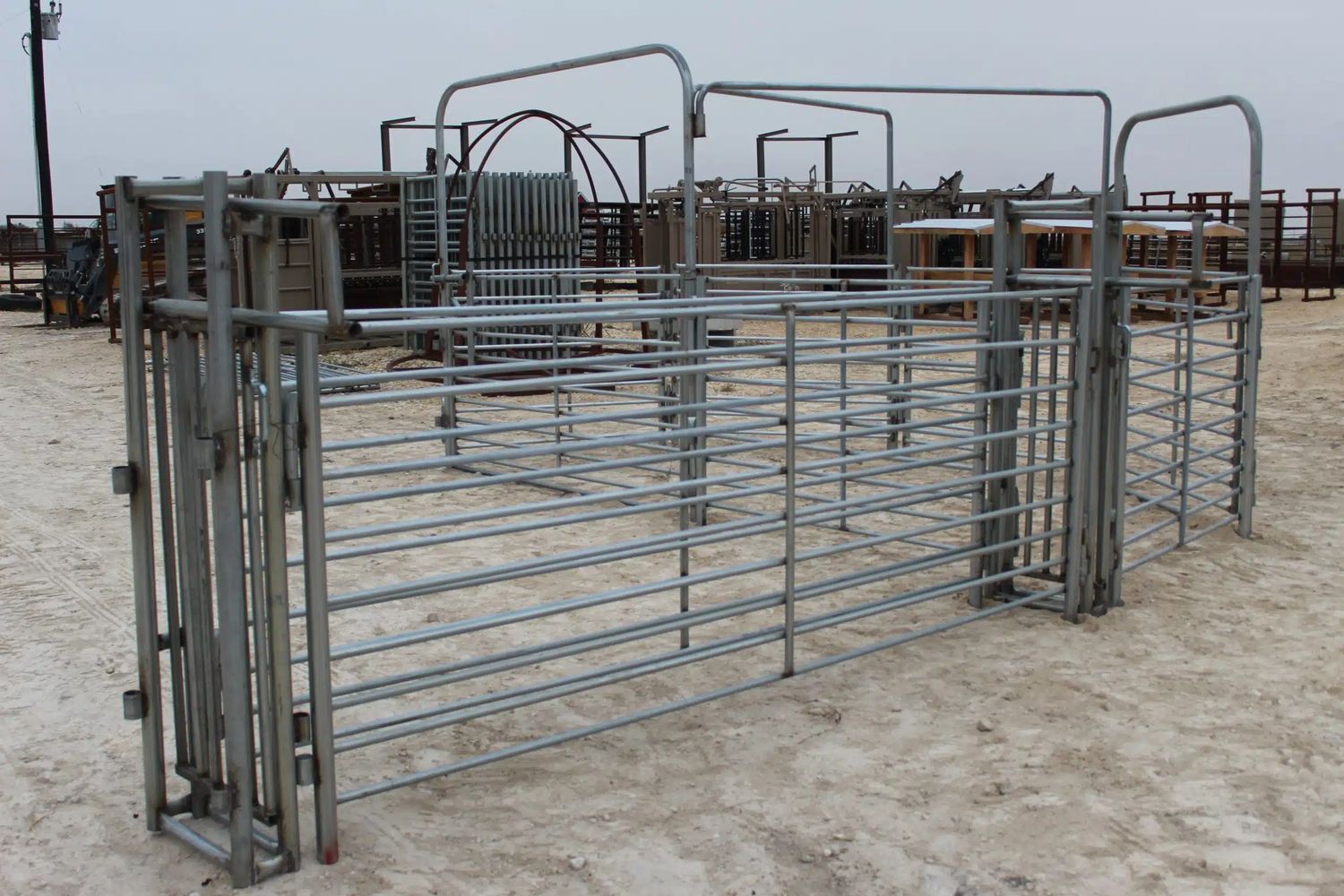
Most equipment problems announce themselves before money changes hands. A cold weld, a thin wall, a latch that binds, a panel that will not stand square on its own — all of it is visible in the first ten minutes if you know where to look.
This is the same walk-around we run on panels, gates, chutes and feeders before they go on a truck. It applies whether you are comparing brands or checking a load when it lands on your place. Twelve points, no special tools beyond a tape measure and a critical eye.
1. Steel and wall thickness
Start with the pipe. Thicker wall is heavier, and weight is what keeps a panel upright when a cow leans on it. Ask what the tube is, then feel the difference between a light panel and a real one — the weight tells you most of the story before the tape measure does.
On cattle panels, the rails and the uprights should feel like the same family of steel. A heavy frame with thin rails is a panel that dents and stays dented.
2. Welds decide the lifespan
Run your thumb along a weld. It should be smooth, full and continuous, not lumpy or burned through. A proper weld ties the rail into the upright across the whole joint; a tack weld touches it in one spot and lets water in behind it.
Look at the inside corners where a rail meets a post. That is where a cheap panel fails first — a hairline crack at the joint turns into a broken rail after a season of cattle pressure. If the welds look like beads sitting on top of the steel rather than fused into it, walk away.
Check the bottom of the uprights too. That joint takes the most abuse and the most moisture.
3. Coating and rust protection
Galvanizing is not cosmetic. In Texas humidity and coastal salt air it is the difference between a panel that looks the same in five years and one that is orange by year two. Look for an even, dull-grey finish across the whole panel, including the cut ends and welds.
Paint hides rust; it does not stop it. If a painted panel already has bubbles or rust bleeding through a weld, the steel underneath is wet and the coating is doing nothing.
4. Gates, latches and hinges
Open and close the gate. Then do it again, ten times. A good gate swings on the hinge without lifting, and the latch catches without you having to line it up by hand.
The latch is the part you touch every single day, so it matters more than the paint. Look for a positive catch that cannot be bumped open by a cow rubbing on it, and hinges with enough pin length that the gate does not sag under its own weight.
Check the gate opening against your equipment. A gate that clears a tractor but not a trailer is a gate you will fight for years.
5. Pins, chains and loose hardware
Every pin should seat fully and every chain should have a real attachment point, not a loop welded on as an afterthought. Loose hardware is the first thing to disappear in a pasture, and a missing pin turns a gate into a leaning fence.
6. Height and bar spacing
Five feet handles mature cows in a settled pen. Six feet is the safer call for bulls, freshly shipped cattle and anything you plan to crowd hard. Do not buy taller than you need — every extra inch adds weight you have to drag and reset by yourself.
On goat and sheep panels, check bar spacing against the smallest animal you will pen. A panel that holds the herd but lets a kid through is not doing its job.
7. Chute floors, hydraulics and head gates
On a squeeze chute, stand inside the frame and look down. The floor should be solid, level and free of gaps that catch hooves. Work the squeeze — it should travel smoothly and hold where you set it, without creeping back.
Check the head gate closes squarely and the self-catch releases cleanly with one hand. A chute that needs two people to operate is a chute that slows down every single processing day.
If it is hydraulic, look for leaks at every fitting and ask how the system was pressure-tested. If it is manual, make sure the linkage is direct — extra pivots mean extra slop.
8. Feet and ground contact
Set the panel or pen on flat ground and see whether it stands on its own. Feet should sit flush, with no rocking. On freestanding panels, the base has to be wide enough that a push at the top does not tip the whole run.
9. Fit and finish
Sharp edges, weld spatter and misaligned holes are not just cosmetic — they are a signal about how the piece was built. If the holes do not line up when the panel is square, they will not line up under load either.
10. What to check at delivery
Inspect the load before you sign. Count the pieces against the invoice, check for freight damage at the corners and feet, and confirm the gates and latches you ordered are the ones that arrived. Once it is on your trailer, the conversation about a bent panel gets much harder.
Ask what the warranty covers and who handles a claim. A written answer beats a verbal one every time.
The 12-point check, in order
- Wall thickness and weight — does it feel like real steel?
- Weld quality at every rail-to-post joint
- Welds at the base of each upright
- Coating coverage, including cut ends
- Gate swing and hinge sag
- Latch strength and one-hand operation
- Pin fit and chain attachment points
- Height and bar spacing for your stock
- Chute floor, squeeze travel and head gate
- Feet flush, frame stands square
- Hole alignment and edge finish
- Delivery count, freight damage and warranty
If a piece of equipment passes all twelve, it will still be working when the payment is long forgotten. If it fails two or three, the price is telling you something the salesman is not.
Questions on a specific panel, gate or chute? Call the Temple or Victoria lot and we will walk you through it.
Common questions
What should I check first when inspecting farm equipment?
The welds. A full, fused weld at every rail-to-post joint tells you more about how a piece was built than paint, branding or price. A tack weld will fail first under load.
How can I tell if galvanizing is done properly?
Look for an even, dull-grey finish across the whole piece, including cut ends and welds. Bare steel at a weld or a scratch that has already started rusting means the coating is not protecting the joint.
Does panel height really matter?
Yes. Five feet is enough for settled cows; six feet is the safer choice for bulls, freshly shipped cattle and anything you plan to crowd. Taller also means heavier, so match it to the stock rather than buying the biggest option.
What should I check when equipment is delivered?
Count the pieces against the invoice, inspect corners and feet for freight damage, confirm the gates and latches match the order, and get the warranty terms in writing before you sign.