Build the Corral Backward, Starting at the Chute
Most bad corrals were built outward from a gate. Start at the chute, work backward, and the layout follows how cattle actually move.
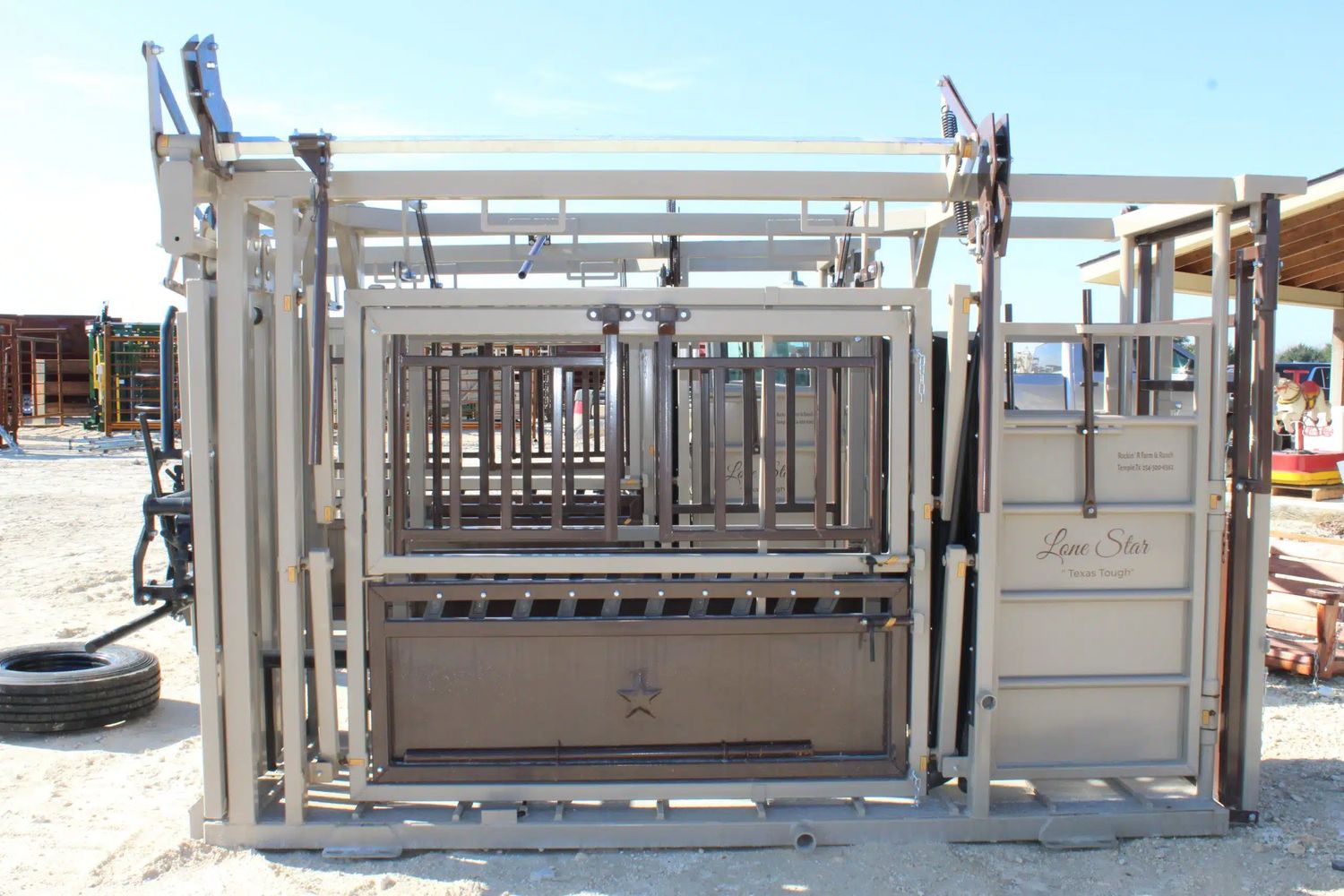
Most bad corrals were built outward from a gate. Somebody set a gate where it was convenient, ran panels to the fence, and then spent the next decade pushing cattle into a corner that fights them.
Build it the other way. Start at the chute, work backward to the holding pens, and let the layout follow how cattle actually move.
Start with the chute
Put the chute where a truck can back to it and where the ground drains. Everything else is arranged to deliver cattle to that spot, one at a time, without turning around.
Concrete under and around the chute is worth the money. It stays level, it does not turn to mud in February, and it gives you a clean place to stand.
Work backward: alley, crowd, holding pens
From the chute backward the order is alley, crowd pen, holding pens, gather pens. Each one holds more animals than the one ahead of it, and each one narrows.
Holding pens are sized by head. Twenty square feet per cow and about fourteen per calf is the long-standing extension recommendation. Thirty cows want roughly six hundred square feet, and that is before you add a sorting pen.
Build two holding pens instead of one big one. With one pen, every sort happens in the alley, which is the slowest and most dangerous place to do it.
Crowd pen: sweep or Bud Box
The crowd pen takes cattle from the holding pen and feeds them into the alley. There are two schools.
A sweep system uses curved panels and a swinging gate to turn cattle in a circle and deliver them to the alley. Cattle naturally want to circle, so the curve works with them, and the gate keeps pressure on from behind.
A Bud Box is a rectangular pen with the alley set at a right angle at the point of entry. You fill the box, step to the side, and the cattle turn to look at you and see the alley. It uses less hardware and is simple to build. It also rewards a handler who understands pressure and punishes one who crowds too hard.
Both work. The sweep is more forgiving and easier to run alone with wild cattle. The Bud Box is cheaper and simpler and suits a handler who works quietly.
The alley
Twenty-six to thirty inches is the working range for mature cows. Narrower holds them straighter and stops turning. Too narrow and a big cow wedges. Twenty-eight inches is a common compromise, with some room to adjust for bulls or for calves.
Make the alley long enough to hold several head, so you are not walking back for one animal every time. Solid sides keep cattle from seeing out and balking. Slatted or open sides look friendlier and work worse.
Keep the floor level and put a shadow-free light at the chute end. Cattle balk at shadows and at changes in the floor, and both are easy to avoid when you pour concrete.
Gates and openings
Every gate should swing into a pen, not into the alley. A gate that swings into a lane jams the flow and gives an animal something to push against.
Ten to twelve feet is a good working opening. Sixteen feet if you need to move equipment or a trailer through. Hang the gate so it falls open or closed on its own instead of balancing in the middle.
Latches matter more than people expect. You will open and close them hundreds of times a year with gloves on, in the dark, with cattle moving.
Sorting pens and the load-out
Two or three sorting pens off the holding area turn a long day into a short one. Size them for the groups you actually split: calves, replacements, culls, bulls.
Put the load-out where a trailer can pull straight out. A ramp or a load-out pen at the end of the alley, with a gate that closes behind the last animal, is the difference between loading in ten minutes and loading in an hour.
Site and drainage
High ground, away from the house and away from the direction weather usually comes from. Cattle standing in a pen in wind and mud will tear it up and tear themselves up.
Drain the pens away from the chute. Slope the concrete, and put the corral where water leaves rather than where it pools.
Shade is not a luxury in Texas. A pen with no shade is a pen cattle avoid, and a pen cattle avoid is a pen you cannot fill.
Build it in phases
You do not have to pour and weld the whole thing at once. Freestanding panels let you set up a workable pen this month, run cattle through it, find out what is wrong, and move a panel before you commit to concrete.
Most operations end up with a permanent chute and alley and portable panels for the holding and sorting pens. That combination is cheap to change and handles most of the work.
Then walk it
Before you call it done, walk the whole flow on foot the way a cow would. From the gather pen to the chute, look for corners she can turn into, shadows on the floor, gaps at panel joints, and gates she can see through.
Fix those before you put cattle in. It is much easier to move a panel than to retrain a herd.
What to build first
If money only covers one section this year, build the chute and the alley. A good chute with a short alley and a couple of portable panels will get you through branding, vaccinations and preg checks. The pens can grow around it as the herd does.
The reverse order, a big pen with no chute, is the one that costs you every single time you work cattle.
Common questions
How wide should a cattle alley be?
Twenty-six to thirty inches for mature cows, with twenty-eight inches a common starting point. Go narrower for calves and wider for bulls, and build in adjustment if you can.
How big a holding pen do I need for 30 cows?
At roughly twenty square feet per head, about six hundred square feet. Add a separate sorting pen so you are not sorting in the alley.
Is a Bud Box or a sweep tub better?
Both work. Sweep systems are more forgiving and easier with wild cattle. A Bud Box uses less hardware and suits a quiet handler who understands pressure.
Can I build a corral out of freestanding panels?
Yes, and it is the smart way to start on leased ground. Set the panels level, pin every joint, and brace the corners so cattle cannot push a leg in and tip a panel.