A Head Gate Holds the Head. A Chute Holds the Whole Animal.
They are not the same tool and they are not interchangeable. Here is how to tell which one your operation needs, and when you need both.
Ask ten ranchers the difference between a head gate and a squeeze chute and you will get three answers, two of which are wrong. The two tools do different jobs, and knowing which job you are paying for is the difference between a good buy and an expensive lesson.
What a head gate does
A head gate catches an animal by the head and neck and holds it there. The animal stands on its own four feet with its body free. That is the whole design.
A self-catch head gate closes when the animal walks into it and latches without anyone pulling a rope. A manual gate needs an operator on the lever. Self-catch is faster and easier on the arms when you work alone, and it is what most small operations want.
With a head gate alone you can vaccinate, tag, pour, preg check with a cage behind it, and do anything that only needs the head still. The animal can still shift its weight, kick sideways and drop a shoulder.
What a squeeze chute adds
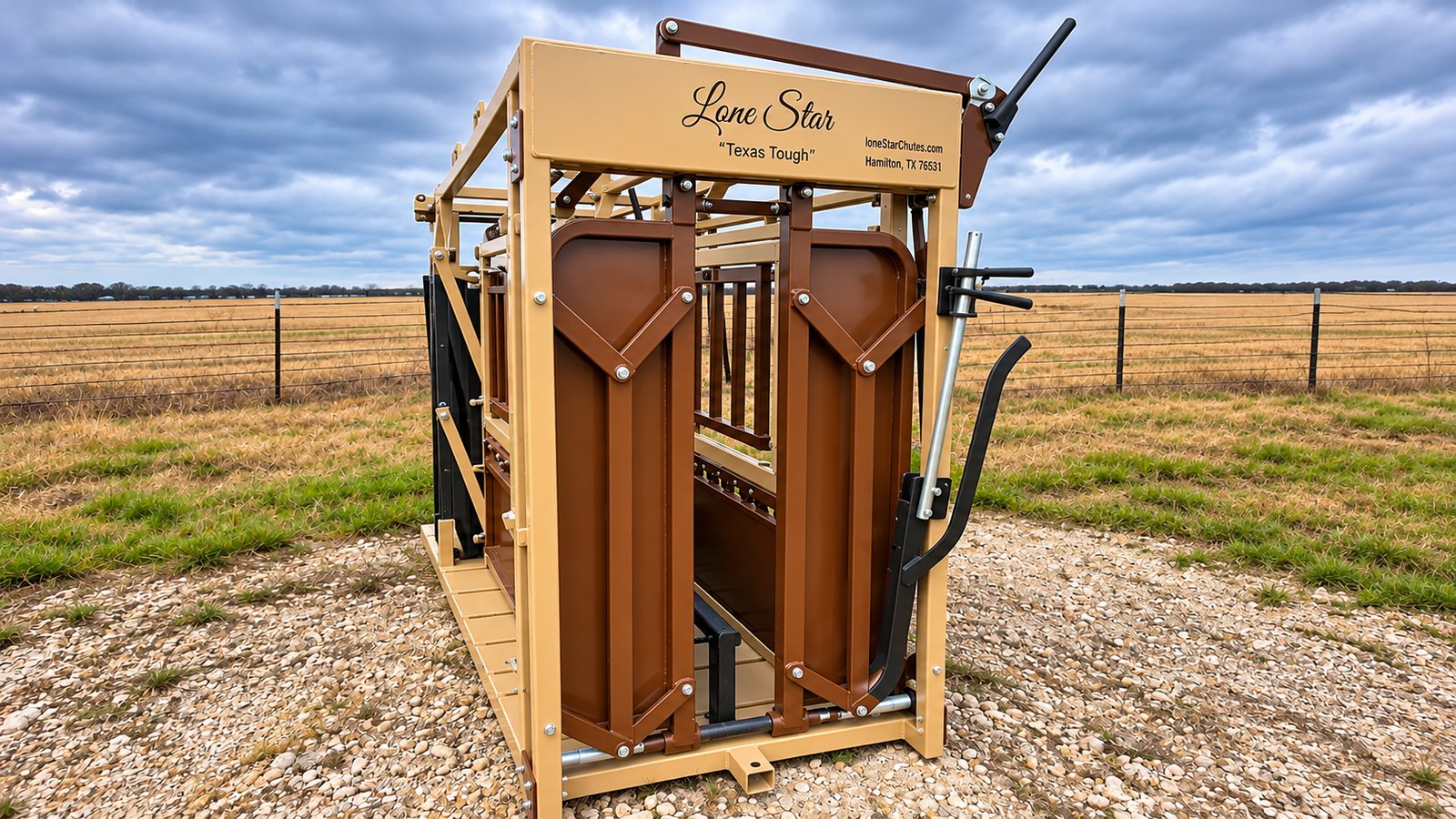
A squeeze chute is a head gate plus sides that come in and hold the body. That is the difference. The squeeze takes away the leverage an animal uses to fight.
That matters for anything involving the body: preg checking without a cage, AI work, foot trimming, dehorning, castrating bigger calves, treating a wound on the flank, or working an animal that has decided it does not want to be there.
Modern chutes usually add a chin lift or nose bar, a vet door on the side, and a drop or removable panel at the bottom. Each of those is a small feature that saves you a large argument.
When a head gate is enough
If you run twenty cows, work them twice a year, and they walk into a lane on their own, a head gate and a good alley will do most of what you need. Add a palp cage behind the gate and you can preg check without a chute.
That setup costs a fraction of a chute and takes up less room. For a lot of small operations it is the correct answer, not a compromise.
When you need the squeeze
Buy the chute when any of these are true:
- You work more than a handful of cattle at a time and time matters.
- You have bulls, wild cattle, or cattle that come off a trailer and have never seen a pen.
- You do preg checks, AI, foot work or any procedure on the body.
- You work alone. A squeeze chute is a second set of hands.
- You hire out the work. A contractor will bring a chute if you do not have one, and you will pay for it every visit.
The middle path
Plenty of operations run a head gate into a short alley with a palp cage at the end and skip the chute entirely. That is a real system, not a starter kit. The palp cage takes the kick risk during pregnancy checks, and the gate handles the head.
The weakness is throughput and control. Anything that needs the body held still will still need a chute, and if you ever buy a bull or take in outside cattle, you will want one.
What to look for in a head gate
- Self-catch or manual. Self-catch if you work alone. Manual if you want to control exactly when it closes.
- Width adjustment. A gate that fits a mature cow will let a calf turn around. Look for something that adjusts, or a gate sized for the class of cattle you run.
- Latch and release. You need to open it from the working side, with one hand, without leaning over the animal.
- Head opening shape. A straight bar catches necks. A shaped opening holds better and is easier on the animal.
- Mounting. The gate has to attach to a real post or a chute frame. Bolting it to a panel is how gates get torn out.
What to look for in a chute
Frame and welds first. Then the squeeze mechanism. A ratchet or mechanical squeeze is simple, repairable, and does not care about hydraulic fluid. Hydraulic is faster and easier on the operator and adds a pump, hoses and cylinders that can fail.
Check the side panels for how far they come in and whether they stay parallel. Look at the floor. Cattle need grip, and smooth steel in the rain is a slip hazard for them and a danger for you.
Look at access. A vet door, a removable bottom panel and a place to stand beside the animal turn a two-person job into a one-person job. A chin lift saves your back on tagging and dehorning.
Finally, look at how it exits. A side exit or a front gate that swings clear matters when you are pushing cattle through at speed.
Safety, briefly
Never stand in front of a head gate. Never reach through a chute while an animal is in it. Keep the alley full so cattle move forward instead of backing up. Work quietly. A chute does not fix a handler who is yelling.
Most injuries in a working pen happen at the chute, and most of those happen because someone was standing where an animal could reach them.
Buy once
If you are going to own cattle for twenty years, buy the chute you cannot quite justify today. If you are going to run a dozen head on leased ground and work them twice a year, a good self-catch head gate and a palp cage will do the job and leave money for panels.
Either way, buy the gate or the chute for the cattle you will have, not the cattle you have this week. The difference between a head gate and a squeeze chute is control, and control is what keeps you out of the emergency room.
Common questions
Can I preg check with just a head gate?
Yes, with a palp cage behind the gate. The cage is what protects you from a kick, and it is the reason a head gate plus cage is a legitimate setup rather than a shortcut.
Is a squeeze chute worth it for 20 cows?
It depends on how often you work them and whether you hire the work out. For twice-a-year vaccination on quiet cattle, a head gate and cage usually do the job. For palpation, AI or foot work, the chute pays for itself.
What does a chin lift do?
It lifts and holds the head so you can tag, dehorn, treat eyes or work the head without the animal throwing it around. It is one of the most useful options on a chute.
Do I need a scale on my chute?
Not to start. A scale is worth adding later for weight-based dosing and for marketing cattle, and many chutes are built to accept load bars when you are ready.