
Small Acreage Fencing: Pipe, T-Post or Continuous, and How to Build the Corners
Ten acres is about 2,640 feet of perimeter. Here is how to choose between pipe, T-post and continuous fence, and why the corners decide the job.
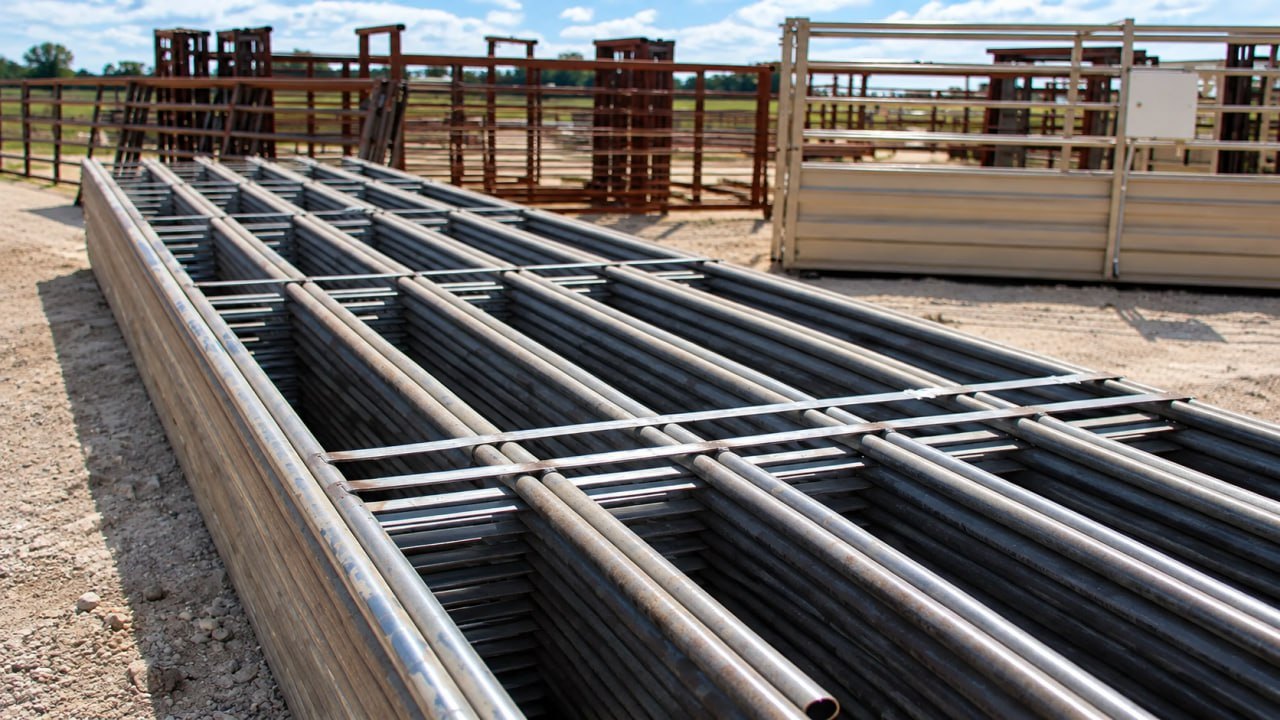
Fencing a small acreage is a different job than fencing a section. On ten or twenty acres you can afford to think about it, and you will walk that fence line for the next twenty years. The three materials most people choose between are pipe, T-post with wire, and continuous fence panels. They are not interchangeable, and the corners decide whether any of them stay tight.
Figure the job before you price it
An acre is 43,560 square feet. A square ten-acre place is about 660 feet on a side, which is a perimeter of roughly 2,640 feet. Forty acres square is about 1,320 feet per side, or 5,280 feet around. Forty acres is not four times the fence of ten acres; it is twice the fence for four times the ground. That is why big places fence cheap and small places fence well.
Draw the place on paper. Mark the property lines, the gate locations, the water, the barn, and any lane you want. Then add the cross fences you actually need: a lane to move cattle, a trap for working, a pen for the horses. Every corner you draw is a brace you have to build. Every gate is two more posts that have to be set deep.
Pipe: the long-life choice
Pipe fence is welded steel. Line posts usually run eight to ten feet apart, set deep enough that you cannot rock them, with rails welded between. It does not rot, it does not need stretching, and it holds cattle, horses and bulls about as well as anything made.
The trade-off is cost and repair. Pipe costs more per foot than wire, and when a tree falls on it you need a welder, not a fence stretcher. It also has no give. An animal that hits pipe hard gets hurt, which matters with horses.
Where pipe earns its money: the frontage, the corral, the load-out lane, the bull pen, and any place where a vehicle might push a fence. Those are the spots where a wire fence gets torn up and a pipe fence just stands there.
T-post and wire: the working fence
A T-post fence with woven wire or barbed wire is the standard agricultural fence for a reason. It is fast, it is affordable, and one person can build a lot of it. Line posts typically go every eight to twelve feet for woven wire, driven about eighteen to twenty-four inches into the ground. Stay tighter on hills, in soft ground, and anywhere cattle lean.
Posts are only half the fence. Wire has to be stretched tight, and it has to be tied to the posts so it cannot slide. A fence that looks fine from the truck but has loose wire and staples set at an angle will be sagging by the second summer.
T-post fences are not built for pressure. Cattle rub on them, horses lean over them, and a frightened animal can run through wire. Use them for pasture divisions and interior lines, not for the pen where you sort.
Continuous fence: the middle road
Continuous fence panels are welded steel panels, commonly twenty feet long and four to five feet tall, that bolt or pin end to end into a continuous run. They go up fast, they look sharp, and they hold up to horses better than wire because there are no sharp edges and no wire to sag into.
The panels need solid end posts and a brace at every corner, just like wire. The joints are the weak point if the ground moves; a run that is not set on a straight line will show every bit of it at the connections. They are also harder to repair than wire if a panel is bent.
For a small acreage with horses, a barn lot, or a front pasture that people see, continuous fence is a genuinely good answer. For a long property line in rough country, wire is usually the practical answer, and pipe is the answer for the pressure points.
Corners and braces: where fences fail
Almost every fence that leans, sags or pulls out of the ground failed at a corner, an end, or a gate. The wire is rarely the problem. The brace is.
A proper brace is a horizontal member between two posts, with the posts set deep and the horizontal member sized to take the pull. On wood, a corner post of at least six inches set three and a half to four feet deep, with a brace six to ten feet long, is the common standard. A double H or an N-brace is what you use where the pull is heavy or the soil is soft.
Brace in the direction the wire pulls. On a corner, that means bracing both ways, or building a double brace. A single brace on a corner only resists one direction, and the fence will pull the other way.
Gate posts get the worst of it. A gate is a lever, and every time it swings it loads the post. Gate posts should be bigger and deeper than line posts, and braced against the swing. Hanging a fourteen-foot gate on a post set two feet deep is a guarantee that the gate will drag by fall.
Order of work
- Clear the fence line. You cannot stretch wire through brush, and you cannot weld pipe where you cannot see.
- Set the corners, ends and gate posts first. These are the anchors, and everything else lines up to them.
- Build the braces. Do not skip this to save a day; you will spend the day later.
- Run the line posts, checking straightness from one corner to the next.
- Stretch and tie the wire, or weld the rails, working from a braced end.
- Hang the gates last, after the posts have settled.
Mistakes that cost the most
- Using a T-post as a corner or gate post.
- Bracing only one direction on a corner.
- Setting posts at nominal gate width without checking the gate.
- Stretching wire by hand instead of with a stretcher and a proper pull.
- Fencing the property line first and the working pens last, when the pens are what you use every day.
- Building a fence too short for the stock. A forty-two-inch fence holds sheep; a goat will go over it.
Build the pressure points first: the corral, the lane, the gate you use every morning. Then run the pasture line. Delivery is available on fencing and gates, and the store can help you work out post counts and brace sets from your drawing before you start digging.
Common questions
How much fence does ten acres need?
A square ten-acre place is about 660 feet on a side, so roughly 2,640 feet of perimeter before you add cross fences, lanes or pens. Forty acres square is about 5,280 feet around. Draw the place and measure the lines you actually need rather than guessing from the acreage.
How far apart should T-posts be?
Eight to twelve feet for woven wire is the common range, driven about eighteen to twenty-four inches into the ground. Go tighter on hills, in soft ground, and anywhere cattle lean on the fence.
Do I need to brace a corner in both directions?
Yes. A corner takes pull from two directions. A single brace only resists one of them, and the fence will pull the other way. Use a double brace, a double H, or an N-brace on corners and on any heavy pull.
Is continuous fence good for cattle?
It can hold cattle, but it is at its best for horses, barn lots and frontage where looks and safety matter. It needs solid end posts and a brace at every corner, and a bent panel is harder to repair than wire. For long rough property lines, wire is usually more practical.