
Fencing and Pens for Sheep and Goats That Actually Hold
Most sheep and goat escapes happen through a gap, not over the top. Height, mesh size, predator aprons and a pen layout that works for small stock.
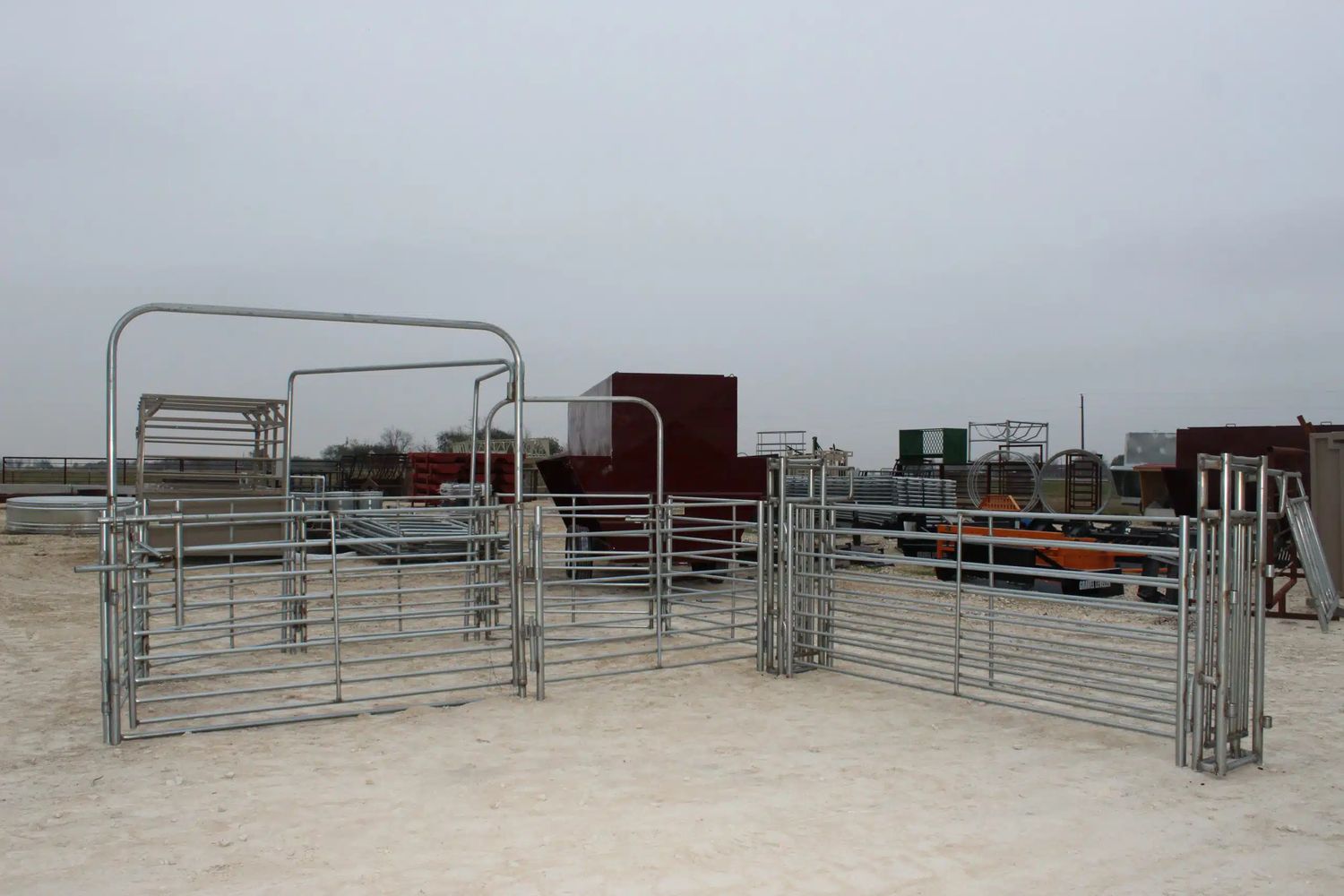
Sheep and goats do not respect a fence because it is expensive. They respect it because there is nowhere to put a head, a hoof or a shoulder. Most escapes are not animals going over the top. They are animals going through a gap, under a wire, or into a corner that was never tight to begin with.
Height: the first number
Forty-two inches is a working height for sheep. Forty-eight inches is the floor for goats, and five feet is where you go if you have jumpers, heavy pressure, or a breed that likes to climb. Goats will stand on a stump, a feeder, or another goat and go over a fence that looked tall enough from the ground.
Height alone does not hold them. A five-foot fence with a six-inch gap under it is a four-foot fence with a hole in it. The bottom of the fence has to meet the ground, and it has to stay there through a wet winter.
Gaps: where they actually get out
Mesh size matters more than most people expect. Four by four inches is a common goat standard; two by four is better where you have kids or miniature breeds. Anything with six-inch openings lets a kid put its head through, and a head that goes through usually brings the rest of the animal.
Welded wire is fine where it is protected and tight. Woven wire with a fixed knot is stronger and holds its shape better when an animal hits it. Barbed wire is a poor choice for sheep and goats: wool and hair catch in the barbs, and an animal that gets hung up can tear itself badly.
Walk the fence and look for the gaps you did not build: under gates, at corners where the wire pulls away, where a panel meets a post, and at the water gap in a low spot. Those are the escape routes.
Predators: fence from both sides
A fence that keeps animals in does not automatically keep predators out. Coyotes dig. Dogs run a fence line and push animals through it. Mountain lions and bobcats climb. The fence has to be thought of as a barrier in both directions.
Three things help most. First, a tight bottom: an apron of wire laid outward at the base, or wire buried a few inches, stops digging. Second, an electric offset wire outside the fence at about six and twelve inches off the ground teaches a predator to back off. Third, a night pen close to the house for lambs, kids, and any animal that is sick or heavy with young.
Electric fence on its own is a containment tool, not a predator fence, unless it is a multi-strand net. It works well as an outer layer and poorly as the only layer where coyotes are thick.
Pen layout for sheep and goats
A working pen for small stock needs the same flow as a cattle pen, scaled down: gather, sort, alley, load. The difference is that gaps and heights that cattle ignore are escape routes for sheep and goats. Panels made for small stock have closer bar spacing and a tighter bottom rail, which is why goat and pet panels exist.
A sweep system is the piece that makes a small-ruminant setup work. It curves the animals into the alley instead of cornering them, and it lets one person move a group without a dog or a second hand. Pair it with a sorting gate and a load-out that a trailer can back to.
Build the alley narrow enough that animals cannot turn around. A sheep or goat that turns in an alley stops the whole flow, and you will be climbing in to fix it. Width depends on the size of your stock, so measure the widest animal and work back from there.
Gates and handling
Gates need to be wide enough for a side-by-side or a small tractor if you will ever drive through, and tight enough at the bottom that a kid cannot slide under. A gate that swings into a pen instead of out of it will be blocked by animals every time you use it.
Horns change handling. A horned goat or ram can get caught in bar spacing that is fine for a polled animal, so check the spacing at head height, not just at the bottom. Ear tags and coats catch on rough welds and wire ends; run a hand along the inside of the pen and feel for anything sharp.
Water and feed pull animals into fences
Set water and hay back from the fence line. An animal reaching through for the last bite is how wire gets stretched and posts get pulled, and a trough hard against the wire turns the ground into a wallow. A few feet of setback keeps heads on the inside and keeps the fence standing.
Mineral feeders and salt blocks are the same story. Put them in the open instead of in a corner, and move them when the ground around them turns to mud.
Maintenance is the fence
Small-stock fence needs a walk every few weeks. Look for a sagging wire, a post that has heaved, a gap at a gate, and anything shiny where an animal has been rubbing. Fix the small things before they become a hole. A twenty-minute walk with a pair of pliers saves a morning of chasing goats down the county road.
Keep the grass down along the bottom of the fence. Vegetation hides gaps and holds moisture that rots posts. It also gives predators cover to work the line.
What to buy first
- Tight perimeter fence at the right height for the species.
- Gates that latch positively and close tight to the ground.
- A small working pen with an alley and a sort gate.
- A sweep system if you move groups regularly.
- Electric offset and an apron where predators are a problem.
Do not buy the panels before you know the fence line is tight. A good pen inside a bad perimeter is a pen you use to catch animals that got out. Delivery is available on panels and sheep and goat equipment, and the store can help you lay out a pen that fits the space you have.
Common questions
How tall does a goat fence need to be?
Forty-eight inches is the practical minimum for goats, and five feet is better where you have jumpers or heavy pressure. Goats will climb on stumps, feeders or other animals, so height only works if the fence is tight at the bottom and there is nothing to stand on.
What mesh size keeps goats in?
Four by four inches is a common standard, and two by four is better for kids or miniature breeds. Anything with six-inch openings lets a kid put its head through, and a head that goes through usually brings the animal with it.
How do I stop coyotes from digging under the fence?
Lay an apron of wire outward at the base, or bury wire a few inches down, so digging meets steel instead of soil. An electric offset wire outside the fence at about six and twelve inches off the ground adds a deterrent, and a tight night pen for lambs and kids is the surest protection.
Is barbed wire okay for sheep and goats?
It is a poor choice. Wool and hair catch in the barbs, and an animal that gets hung up can tear itself badly. Woven wire with a fixed knot, or closely spaced panels, is safer and holds better.