Which Skid Steer Attachments Earn Their Keep on a Ranch
The bucket is the least interesting thing you own. A practical order for buying skid steer attachments, and the machine limits that decide what fits.
A skid steer is a power unit with a quick attach plate on the front. The attachments are what turn it into a tool. Most people buy the machine first and then discover that the bucket is the least interesting thing they own. The question is which attachments earn their keep on a ranch, and in what order to buy them.
Start with the machine's limits
Every attachment's weight comes off the top of the machine's rated operating capacity. A heavy attachment on a small machine turns a stable loader into a tipsy one, and the load chart does not care how useful the attachment is. Know the machine's rated capacity, know what each attachment weighs, and leave a margin. A bucket full of wet dirt is heavier than most people estimate.
Powered attachments need hydraulic flow. An auger or a grapple that runs well on a high-flow machine will be sluggish on a standard-flow unit. Check the flow requirement before you buy, not after.
The quick attach plate itself is standardized across most brands, which is the good news. Most attachments will pin onto most machines. The bad news is that "will pin on" and "will work well" are different things.
Forks: the most-used attachment on a ranch
Pallet forks do more jobs than any other attachment. They move pallets of feed, bundles of T-posts, square bales, seed sacks, fence panels, and equipment that is too heavy to lift by hand. They also work as a poor man's crane for light loads, which is exactly when people get hurt, so keep the load low and the machine on flat ground.
Forks are the first attachment to buy after the bucket, and the one people say they wish they had bought sooner. Get a set rated for more than you think you need. Bent forks are a common and expensive mistake.
Hay spear: round bales without leaving the seat
A hay spear is a single heavy tine, or a pair, that slides into the center of a round bale. It lets one person move and feed bales without a tractor and without getting off the machine. On a place that feeds round bales all winter, it pays for itself in a season of not wrestling bales by hand.
Spears are simple, which is why they last. Check the mounting and the weld at the tine. A spear that bends at the plate is a spear that was overloaded or built too light for the bale size.
Gravel leveler: the driveway tool
A gravel leveler is a grading attachment with a cutting edge and a pair of skids or runners that control depth. It pulls gravel back from the edges, fills potholes, and restores the crown on a driveway. For anyone with a long gravel lane, it is the attachment that stops the annual call for a load of rock.
The skill is in the setup, not the attachment. Set the skids so the blade cuts lightly, work in passes, and keep the crown. A leveler run too deep just makes a bigger mess and pulls the base out of the road.
It also handles gravel pads, barn floors and yard repair. It is not a finish grader and it is not a dozer. Expect it to maintain a road, not build one from nothing.
Rock bucket and grapple work
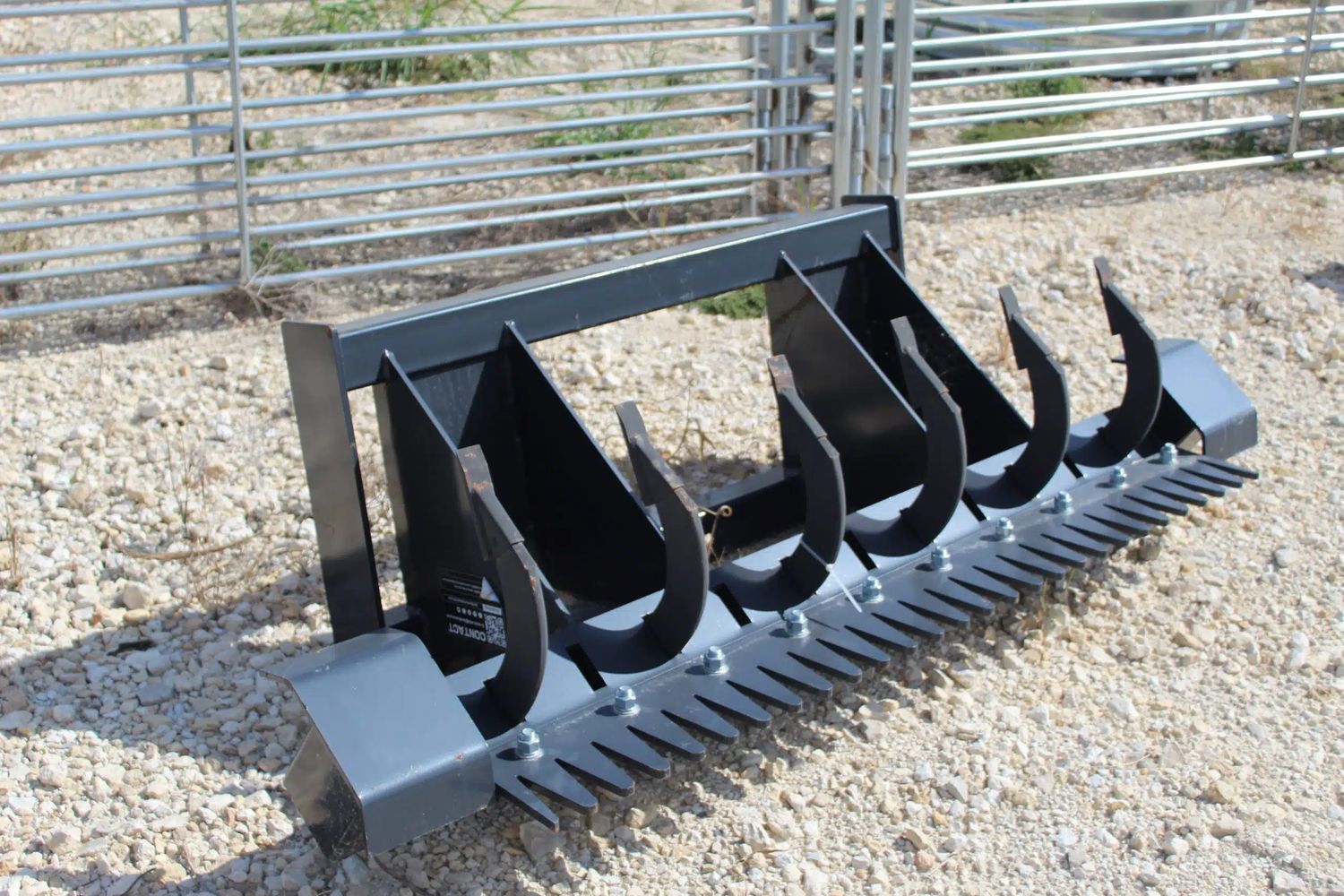
A rock bucket has tines with gaps, so dirt falls through and rock, roots and debris stay in the bucket. It is the tool for cleaning up after clearing, picking rock out of a food plot, and moving brush without carrying half the soil with it.
A grapple, where the machine has the hydraulics for it, is the brush tool. It grabs a pile and carries it instead of pushing it, which is faster and leaves less dirt in the burn pile. If you clear fence lines or cedar, a grapple changes the job.
The rest of the catalog
Augers dig fence posts and tree holes. A tree spade moves small trees. A boom lifts and reaches. A ripper breaks hard ground. Fork extensions let you handle wider loads. Each is worth owning if you do that job often and worth renting if you do it once.
The test is simple. If you will use it more than a handful of times a year, own it. If it is a once-a-year job, rent it and keep the money for the attachments you will actually use. Storage and maintenance are real costs too; every attachment needs a place to sit and a little grease.
Buying order for most ranches
- Bucket, which usually comes with the machine.
- Forks.
- Hay spear, if you feed round bales.
- Gravel leveler, if you maintain gravel.
- Rock bucket or grapple, if you clear or clean up.
- Specialty tools as the work demands.
Buy the attachment for the job you do every week, not the job you might do someday. A ranch that feeds hay needs a spear before it needs a tree spade. A ranch with a quarter mile of gravel needs a leveler before it needs a grapple.
Keeping attachments usable
Steel lasts, but it does not maintain itself. Grease the pins, keep the quick attach plate clean so it seats fully, and touch up a weld before a crack becomes a break. Store attachments on pallets or stands instead of setting them in the dirt, where the bottom edge rusts and the pins fill with mud.
A dull cutting edge costs more than a new edge. It makes the machine work harder, leaves a rougher finish and wears the bucket or blade faster. Replace or sharpen an edge when it rounds over, and check hoses and couplers on anything hydraulic before the season starts, not in the middle of a job.
What to check before you buy
- Weight against the machine's rated capacity.
- Hydraulic flow requirement for anything powered.
- Quick attach plate condition and pin fit.
- Welds at the load points, not the paint.
- Cutting edges and tines for wear, especially on used attachments.
- Whether the attachment has been stored inside or left in the weather.
A used attachment in good condition is often the smart buy, because steel does not wear out the way engines do. Look at the wear points, not the age. Delivery is available, and both stores stock the common attachments; call with your machine's rated capacity and they will tell you what fits.
Common questions
What skid steer attachment should I buy first?
Forks, after the bucket. They move pallets, feed, posts, panels and equipment, and they get used more than any specialty attachment. Buy a set rated for more than you think you need, because bent forks are a common and expensive mistake.
How do I know if my skid steer can handle an attachment?
Check the attachment's weight against the machine's rated operating capacity and leave a margin. Powered attachments also need enough hydraulic flow. A heavy attachment on a small machine makes it unstable, and a high-flow tool on a standard-flow machine will run poorly.
Is a gravel leveler worth it for a long driveway?
If you maintain gravel regularly, yes. It pulls rock back from the edges, fills potholes and restores the crown, which cuts down on how often you buy new rock. Set the skids for a light cut and work in passes rather than trying to grade it all at once.
Should I buy or rent a skid steer attachment?
Own it if you will use it more than a handful of times a year. Rent it if it is a once-a-year job. Storage, grease and repairs are real costs, so a specialty attachment that sits in the weather most of the year is usually better rented.