Four Ways to Feed Hay, and What Each One Costs You in Waste
Hay is the biggest check most operations write in winter. The feeder you choose decides how much of it the cow actually eats.
Hay is the biggest check most operations write in the winter, and waste is the biggest lever on what that check actually buys. A bale that gets trampled is hay you paid for and the cow never ate.
What waste actually looks like
Feed a round bale on open ground and cattle pull it apart, spread it, bed on it and manure on it. University work has put losses from unrolled or ground-fed round bales somewhere between twenty and forty percent, with worse numbers when hay sits out for several days.
Put the same bale in a ring feeder and losses typically fall by roughly half. One comparison of feeding methods found about thirteen percent loss from ring feeders against roughly twenty-four percent from unrolling.
That is not a rounding error. On a hundred bales, a quarter of the hay is twenty-five bales.
The hay ring
The ring is the default for a reason. It is affordable, it is portable, and it keeps the bale together so cattle eat from the outside instead of standing on it.
Weaknesses: cattle crowd one side and boss cows camp at the hay, the ground around it turns to mud, calves and smaller animals get pushed off, and some hay still falls through onto the ground.
Move rings between feedings. A ring in the same spot all winter makes a mud hole that gets deeper every week.
Hay saver and cone feeders
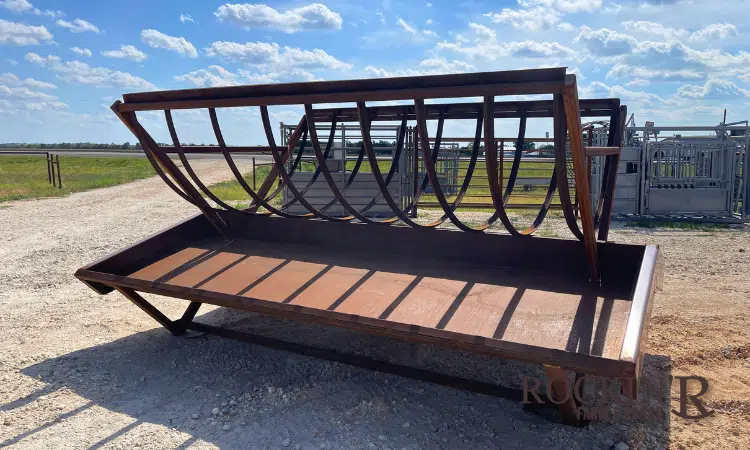
A hay saver or cone-style feeder holds the bale up off the ground and funnels hay down to the animals through openings. Because the hay stays off the ground, less gets trampled and soiled.
These usually cut waste further than a plain ring. The trade is weight, cost and handling: they are heavier to move and some designs need a tractor to load. For a herd fed in one place all winter, that trade is usually worth it.
Bunk feeders
A bunk is a trough. Cattle eat from one or both sides and hay stays in the bunk instead of underfoot. It is the lowest-waste option for ground hay, processed hay, silage and square bales.
Bunks need a tractor and a way to fill them, and they need cleaning. Wet hay left in a bunk sours and cattle will refuse it. In a wet winter, a bunk without drainage is a mold factory.
For a small herd feeding square bales by hand, a bunk is still the cleanest way to feed. You control the amount, you see what is left, and almost nothing is wasted.
Cradles and racks
A cradle holds a round bale off the ground in a curved frame and lets cattle eat from the sides. It keeps the bale cleaner than open ground and is gentle on horses, which need hay off the ground.
Waste is better than open ground and generally worse than a ring or a saver, because hay still pulls out and falls. Cradles are simple, light and inexpensive, which is why they are still common.
The bale matters too
A feeder cannot fix bad hay. Hay baled too wet heats, molds and loses feed value, and cattle will sort through it and leave the rest. Hay that sat outside without cover loses the outside layer to weather, and that layer is the part that ends up on the ground.
Take the net wrap off. Cattle eat twine and net wrap, and it does not pass. A bale fed with the wrap still on is a wreck waiting for a vet. If you feed sisal twine, gather it as it comes off. If you feed net wrap, cut it and count the pieces.
Match the bale to the feeder, too. A feeder built for a four-foot bale will not take a five-foot bale, and forcing one in bends the frame and makes the feeder hard to move. Measure before you buy, and measure the bales you actually put up rather than the ones you wish you did.
Small stock and V-feeders
Sheep and goats waste more hay than cattle if you let them, because they pick through it. A V-feeder or a raised rack keeps hay up and in front of them and out of the mud and manure.
With small ruminants, the feeder matters as much as the hay. A goat standing in its own hay will waste half of it, and parasite pressure goes up.
Match the feeder to the operation
Ask four questions:
- How many animals am I feeding, and will they all fit around one feeder at once?
- Can I move a heavy feeder, or does it need to stay put?
- Do I have a tractor to fill a bunk or move a bale, or am I feeding by hand?
- Where does the mud go?
A hundred cows want several feeders spread out, not one big one. Ten cows want one feeder you can drag with a truck.
Placement beats equipment
The best feeder in the wrong place still makes a mess. Feed on high, dry ground and move the feeding area through the winter. A sacrificial area you are willing to tear up is better than tearing up the whole pasture.
Feeding in a new spot every few days spreads manure and traffic, which is good for the pasture and bad for the mud. On sandy ground you have more options than on blackland clay.
Do the math on your own hay
Take what you pay per bale and multiply by the waste percentage. If you are losing a quarter of every bale, a feeder that cuts that to a tenth pays for itself faster than most people expect, especially in a year when hay is short.
A mature cow eats roughly two to two and a half percent of her body weight in hay dry matter per day, so a 1,200-pound cow is around twenty-five to thirty pounds. That is your starting point for figuring out how many bales a winter takes.
Bottom line
If you feed in one place all winter, buy the heaviest, tightest feeder you can move. If you feed by hand in small amounts, a bunk is hard to beat. If you are still feeding on open ground because that is what you have always done, start there, because that is where the money is going. A feeder pays for itself in saved hay, not in looks, and the difference shows up in the hay barn by March.
Common questions
Does a hay ring really reduce waste?
Yes. Ground feeding of round bales commonly loses twenty to forty percent, and a ring feeder typically cuts that roughly in half by keeping the bale together and off the ground.
What is the difference between a hay ring and a hay saver?
A hay saver holds the bale up in a cone or basket so hay falls where animals can reach it, which usually wastes less than a plain ring. It is heavier and costs more to move.
Should I feed square bales in a bunk?
Yes, if you are feeding by hand. A bunk lets you control the amount, keeps hay out of the mud, and shows you exactly what is left.
How much hay does a cow eat per day?
Roughly two to two and a half percent of body weight in dry matter. A 1,200-pound cow works out to about twenty-five to thirty pounds of hay a day, depending on hay quality and weather.